In short. Under the Noise Pollution (Regulation and Control) Rules 2000, loudspeakers and sound systems need written permission and cannot be used in the open from 10 pm to 6 am, except up to midnight on a few notified festival days. Residential limits are 55 dB(A) by day and 45 dB(A) at night. Complain to the police (112), then in writing to the authority, pollution board or SDM.
Noise complaints are among the most common environmental grievances in Delhi NCR, and among the most badly handled. People call the police at 1 am, the music goes down for twenty minutes, and the same thing happens next Saturday. The rules are clear and the authorities have real powers, including seizing equipment, but they work far better when the complaint is specific, written and repeated through the right channel.
This post covers noise from loudspeakers, DJs, wedding venues, religious places, generators and construction machinery at night: the legal limits, who to complain to, what each authority can do and how to escalate when nothing changes. If the noise comes from a factory along with smoke or effluent, read our post on remedies against factory pollution near your home. For daytime construction dust and debris, see construction dust complaints and penalties.
- The law
- Noise Pollution (Regulation and Control) Rules 2000, under the Environment (Protection) Act 1986
- Night hours
- 10 pm to 6 am
- Residential limit
- 55 dB(A) day, 45 dB(A) night
- Loudspeakers
- Written permission needed; no open-air use at night except notified festival days up to midnight
- First call
- Police on 112, or the local police station
- Escalation
- Written complaint to the authority, SDM under BNSS s.152, pollution board, NGT
Is playing a DJ or loudspeaker after 10 pm illegal?
Yes, in the open. Rule 5 of the Noise Pollution (Regulation and Control) Rules 2000 says a loudspeaker or public address system cannot be used without written permission from the authority, and cannot be used at night, meaning 10 pm to 6 am, except in closed premises such as auditoriums, conference rooms, community halls and banquet halls, or in a public emergency. A DJ is a sound amplification system and falls under the same rule. A DJ on an open lawn, a terrace, a street or a farmhouse garden after 10 pm is a breach, whoever has hired it and whatever the occasion.
There is one relaxation. The state government may allow loudspeakers and public address systems between 10 pm and midnight during cultural or religious festivals, for a limited period not exceeding 15 days in a calendar year, generally notified in advance. Outside those notified days, the 10 pm limit applies. And even on those days, the decibel limits still apply.
The Supreme Court enforced these limits in In re Noise Pollution (2005) 5 SCC 733, where it held that freedom from excessive noise is part of the right to life under Article 21, barred loudspeakers and similar sound sources at night except in public emergencies, and directed states to provide for seizure and confiscation of equipment used to create noise beyond the limits.
What are the permitted noise levels in India?
The Schedule to the Noise Rules sets ambient noise standards in decibels on the A-weighted scale, measured as an average over the period (Leq). Day is 6 am to 10 pm; night is 10 pm to 6 am.
| Area or zone | Day limit dB(A) | Night limit dB(A) |
|---|---|---|
| Industrial area | 75 | 70 |
| Commercial area | 65 | 55 |
| Residential area | 55 | 45 |
| Silence zone | 50 | 40 |
A silence zone is an area of at least 100 metres around a hospital, educational institution, court or religious place, or any other area the authority declares. For a sense of scale, normal conversation is roughly 60 dB(A), and a DJ speaker stack can produce well over 100 dB(A) close up. A night limit of 45 dB(A) in a residential area is quiet, and almost any amplified music audible inside a neighbour's closed room at midnight breaches it.
What limits apply to loudspeakers and private sound systems?
Two further limits apply on top of the ambient standards. Where a loudspeaker or public address system is used at a public place, the noise level at the boundary of that place must not exceed 10 dB(A) above the ambient standard for the area, or 75 dB(A), whichever is lower. For a privately owned sound system, the noise at the boundary of the private place must not exceed the ambient standard by more than 5 dB(A).
In practical terms, a house party in a residential colony can play music during the day as long as the noise at the boundary of the house stays within about 60 dB(A), and at night within about 50 dB(A). A wedding in an open lawn or a jagran in a public park needs written permission, has to stop amplified sound at 10 pm unless it is a notified festival day, and must stay within the boundary limits even before 10 pm.
Rule 5A adds specific prohibitions: no horns in silence zones or at night in residential areas except in an emergency, no sound-emitting firecrackers in silence zones or at night, and no sound-emitting construction equipment at night in residential areas and silence zones. Rule 6 makes playing music, using amplifiers, beating drums or bursting firecrackers in a silence zone a breach in itself.
Who do you complain to about noise pollution?
The Noise Rules name an "authority" responsible for enforcement, which includes the District Magistrate, the Police Commissioner, or any officer not below the rank of Deputy Superintendent of Police designated by the government. In Delhi and in the commissionerates of Gautam Buddh Nagar (Noida) and Ghaziabad, the police are the practical first point of contact, and the local police station also deals with loudspeaker permissions. The district administration, through the SDM, has separate powers over public nuisance.
Rule 7 allows any person to complain to the authority if the noise level exceeds the ambient standard by 10 dB(A) or more, or if any of the night-time restrictions is broken. The authority must act on the complaint. The second limb matters: you do not need a decibel reading to complain about a DJ after 10 pm, because the night-time restriction is broken by the use itself.
For a one-off party, the police are enough. For a recurring source (a banquet lawn that plays past midnight every weekend, a shop generator running all evening, a loudspeaker used daily), make a written complaint to the police station and the DCP or SP, the SDM, and the state pollution board, and keep copies. That written trail is what lets you go further if needed.
How to stop a DJ or loudspeaker tonight
Note the facts
Write down the address of the source, the time the noise began, and take a short video from your home or the street showing the time on screen. If it is after 10 pm, say so.
Call 112 or the police station
Give the exact address, say a DJ or loudspeaker is playing in the open after 10 pm in breach of the Noise Pollution Rules, and ask for a PCR van. Note the call time and any complaint or event number given.
Speak to the officers when they arrive
Tell them where the sound is coming from and that it is after 10 pm. Ask them to check whether permission was taken and, if not, to stop the system. You do not need to confront the organisers yourself.
Note what happened
Record whether the music stopped, when, and the names or numbers of the officers if possible. If it restarts after they leave, call again and say it has restarted.
Follow up in writing the next day
Send a short written complaint to the SHO by email and hand delivery, mentioning the call numbers and times, the video, and asking for action under the Noise Rules. Keep the receipt.
Escalate if it repeats
If the same venue or neighbour repeats it, write to the DCP or SP, the SDM and the pollution board, attaching the earlier complaints. This is the foundation for an SDM order or an NGT case.
What can the police do on the spot?
The police can ask for the written permission, require the sound to be switched off, and, following the Supreme Court's directions, seize equipment used in breach of the limits. In Delhi, the Delhi Pollution Control Committee announced a schedule of environmental compensation for noise violations in July 2021, based on CPCB recommendations, under which loudspeakers used without permission or at night attract a fine and confiscation of the equipment. Police and other enforcement agencies collect these on the spot or through challans.
In practice, the officers who respond to a late-night call usually get the music turned down or off and leave. That solves the night, not the problem. If you want the venue or neighbour to face consequences, ask the officers to record the incident and the absence of permission, and follow up in writing. Repeated recorded incidents at the same address are what persuade an SHO, a DCP or an SDM to take firmer action, such as refusing future permissions or seizing equipment.
Noise fines in Delhi: the DPCC schedule
These are the amounts the DPCC announced in July 2021. They may have been revised since, so check the current order before relying on a figure.
| Violation | Environmental compensation |
|---|---|
| Loudspeaker or public address system without permission or at night | ₹10,000 and confiscation of the equipment |
| Diesel generator above 1,000 KVA breaching noise norms | ₹1 lakh |
| Diesel generator from 62.5 KVA to 1,000 KVA | ₹25,000 |
| Diesel generator up to 62.5 KVA | ₹10,000 |
| Construction equipment exceeding noise limits | ₹50,000 |
| Firecrackers at a marriage or RWA function (organiser and premises owner) | ₹20,000 first time, ₹40,000 second, ₹1 lakh after that, with sealing of the premises |
| Firecrackers by an individual household | ₹1,000 in residential or commercial areas, ₹3,000 in a silence zone |
Can you complain about a loudspeaker at a religious place?
Yes. The Noise Rules apply to every source, including temples, mosques, gurdwaras, churches and religious gatherings such as jagrans and processions. In Church of God (Full Gospel) in India v K.K.R. Majestic Colony Welfare Association (2000) 7 SCC 282, the Supreme Court held that restrictions on loudspeakers and amplifiers at places of worship do not violate the freedom of religion under Articles 25 and 26, because no religion requires prayers to be performed by disturbing others through amplified sound. Permission, the night-time restriction and the decibel limits apply in the same way.
These complaints need care. Go through the authority, not a confrontation, and complain about the noise level and timing, not the faith. A written complaint to the police and the SDM, listing the times and attaching recordings, is the right method. Many such disputes settle when the police ask the management to point speakers inward, lower the volume or stop amplification at night. Uttar Pradesh in particular has run drives against unauthorised loudspeakers at religious places, and the authorities there are generally familiar with the rule.
Weddings, banquet halls, farmhouses and parties
Weddings cause the largest share of night-time noise complaints in Delhi NCR. The rule is simple: inside a properly closed banquet hall, amplified sound may continue after 10 pm as long as it stays inside; on an open lawn, in a tent, on a terrace or in a farmhouse garden, amplified sound has to stop at 10 pm unless it is a notified festival day. A baraat procession with a DJ on the road at midnight breaches the rule regardless of the event.
Venue owners share responsibility. Banquet halls and farmhouses that host open-air events past 10 pm every weekend are repeat violators, and a written complaint listing dates and times can lead the police to refuse loudspeaker permissions for that venue, the board to act, and in a serious case the SDM to pass a nuisance order. Under the Delhi schedule, firecrackers at wedding functions also expose the organiser and the premises owner to escalating fines and sealing.
For a neighbour's party, the same rules apply, but the remedy is usually lighter. A phone call or a word before 10 pm often avoids trouble, and the police can be called if the music continues after. If your neighbour is in the same society, the RWA's bye-laws may also govern noise and timings; our post on RWA and maintenance disputes explains what an RWA can and cannot enforce.
Generator noise: neighbours, shops and housing societies
Diesel generators are regulated under the Environment (Protection) Rules, which require an acoustic enclosure and set a noise limit measured at one metre from the enclosure surface (for the common smaller sets this has long been 75 dB(A)), along with exhaust stack requirements. Check the current notification for the set's size and date of manufacture, because the norms have been revised for newer sets. An open generator without an enclosure, running at the doorstep of a shop or under a neighbour's window, is almost always out of line.
In the NCR there is another restriction. Under the Graded Response Action Plan, the Commission for Air Quality Management restricts the use of diesel generators when air quality worsens, usually in winter, with exceptions for essential and emergency services. The precise rules change each season, so check the current GRAP order. A generator running for hours in a residential lane during a GRAP restriction can be reported to the DPCC or UPPCB and the district administration as well as the police.
For a housing society generator, the first step is a written complaint to the society management or RWA asking for the enclosure to be checked, the exhaust raised and the set moved or serviced. If that fails, complain to the state pollution board, which can inspect and direct compliance; the DPCC schedule lists environmental compensation for generators by capacity. A generator that runs every night because of persistent power cuts is also a question for the electricity distribution company, and a complaint there can address the cause.
Construction machinery, horns and silencers at night
Construction equipment that emits sound cannot be operated at night in residential areas and silence zones under rule 5A. Concrete mixers, piling rigs and stone cutters running after 10 pm next to homes are a breach, and in Delhi construction equipment exceeding limits attracts environmental compensation under the DPCC schedule. Complain to the police for the night itself and to the municipal body and pollution board in writing; our post on construction dust and debris complaints covers the other rules that bind building sites.
Pressure horns, modified silencers and loud vehicles are a traffic police matter under the Motor Vehicles Act and its rules, and are best reported to the traffic police with the vehicle number and a short video. Factory machinery noise is a matter for the pollution board, which applies the industrial and residential standards depending on the zone. In each case the method is the same: identify the source, record it, and complain in writing to the authority with power over it.
How do you measure and prove noise?
You do not always need a measurement. For a DJ or loudspeaker after 10 pm, the use itself is the breach, and a video with the time visible proves it. For daytime noise or a generator, where the question is whether the level exceeds the standard, a measurement helps. Phone decibel apps are not accurate enough to be relied on as proof, but they give a fair idea of whether the noise is far above the limit and can support a request for an official reading.
Ask the authority or the pollution board in writing to measure the noise with a calibrated sound level meter at the boundary of your property, during the hours the noise occurs. Boards and police in Delhi NCR have noise meters for this purpose. If you hire a private reading for a serious dispute, use a professional with a calibrated meter, measure at the boundary as the rules require, and record the time, place and duration.
Keep a noise diary: dates, times started and stopped, the source and the effect (children unable to sleep, an elderly parent unwell, exams). A diary covering several weeks, with matching videos and call records, shows a pattern that one video cannot. When Advocate B.K. Singh reads a noise file, the diary and the record of earlier complaints usually tell him more than any decibel figure, because they show whether the authorities have been given the chance to act.
Evidence to keep for a noise complaint
- Exact address of the source, and its distance from your home
- Short videos with the time visible, from inside your home and at the boundary
- A noise diary with dates, start and stop times, and the effect on your household
- Call records and complaint or event numbers from 112 or the police station
- Copies of written complaints to the SHO, DCP or SP, SDM and pollution board, with receipts
- Any decibel readings, noting the instrument, place and time
- Medical notes if anyone's health is affected
- Names of neighbours willing to sign a joint complaint
- RTI replies on permissions granted to the venue or organiser, if obtained
When the police do not act: the SDM and the designated authority
If repeated calls and written complaints to the police do not stop a recurring source, go to the SDM. Section 152 of the BNSS allows an Executive Magistrate to pass a conditional order requiring a person to stop a trade or activity injurious to the health or physical comfort of the community, or to show cause. Disobeying an order that has been made absolute is an offence, and continuing a public nuisance after a lawful injunction from a public servant is punishable under section 293 of the BNS with up to six months' imprisonment, a fine, or both.
The Delhi High Court pointed residents to this route in February 2026. In Tarika Rekhi v Government of NCT of Delhi (W.P.(C) 10969/2024, decided on 11 February 2026), residents of Shalimar Bagh complained of loud music from unauthorised loudspeakers near their society after approaching the SHO without result. The court did not pass its own order on the noise; it directed them to file a proper complaint with the designated authority under the Noise Rules and to approach the Executive Magistrate under the BNSS, observing that the authorities must act if the limits are exceeded and leaving the residents free to come back if the problem continued.
The lesson is practical. A writ court expects you to have used the statutory complaint first. File a written complaint to the designated authority and an application before the SDM, with your diary and videos, and give them a reasonable time. You can file an RTI application asking for the action taken on your complaint and the permissions issued to the venue.
Can you go to the NGT or the High Court over noise?
Yes, in the right case. The Noise Rules are made under the Environment (Protection) Act, which is one of the Schedule I Acts, so the National Green Tribunal can hear noise matters under section 14 of the NGT Act where a substantial environmental question arises. That usually means a recurring source affecting a locality, such as a banquet strip that plays past midnight every weekend, a commercial establishment with a permanent sound system, or an industrial unit's machinery, rather than one neighbour's party. The tribunal can direct the authorities to monitor, act and report, and can impose environmental compensation.
The time limit for a section 14 application is six months from when the cause of action first arose, so file while the problem is current and build the application on your recent complaints. The steps, the paper book and the fee are explained in our post on how to file an application in the NGT, and our page on NGT cases in Delhi covers the tribunal's wider work.
A writ petition in the High Court is possible where the authorities' failure raises a question of fundamental rights, but as the Shalimar Bagh case shows, the court will usually first ask whether you used the statutory remedies. Our post on writ petitions in the Delhi High Court explains when a writ is the better course.
A made-up example: a banquet lawn next to a Noida society
Here's a made-up example. A residential society in Noida shares a wall with an open-air banquet lawn. From November, weddings on the lawn run DJs until 1 am on most weekends, and the generator for the lighting runs without an enclosure next to the society's boundary. Residents call 112 several times; each time the music goes down and comes back.
The RWA passes a resolution and appoints two members to keep a noise diary. Over six weekends they record the dates, the times the DJ played past 10 pm, short videos from flats facing the lawn, and the 112 event numbers. They send a written complaint to the SHO and the DCP of the zone, the SDM and the UPPCB regional office, asking for action under the Noise Rules, a check of loudspeaker permissions and a noise measurement at the boundary. An RTI to the police asks what permissions were issued for the lawn on those dates.
The police start sending a team on weekend nights and ask the venue to stop amplified sound at 10 pm. The SDM issues a conditional order under section 152 of the BNSS requiring the venue to stop open-air amplified sound after 10 pm and enclose its generator, or show cause. The venue moves its late events indoors and installs an enclosure. Had it continued, the RWA had the record it needed for an NGT application. What made the difference was not one dramatic call but six weeks of dated, written complaints.
Mistakes people make with noise complaints
- Only calling at 1 am. Calls solve the night but leave no paper. Follow every call with a written complaint the next day.
- Confronting the organisers. It rarely helps and can turn a noise problem into a fight. Let the police deal with it.
- Relying on a phone app as proof. Use it to judge the level and to ask for an official reading, not as evidence in itself.
- Complaining to the wrong authority. Night-time loudspeakers go to the police; generators and machinery to the pollution board as well; persistent nuisance to the SDM.
- Complaining alone. A joint complaint from several households, ideally through the RWA, carries more weight.
- Mixing in unrelated disputes. A noise complaint that is really about parking or a property quarrel loses credibility fast.
- Going to court first. Courts expect the statutory complaint to have been made and ignored before they step in.
When talking works better than complaining
Many noise problems are best solved before any complaint. A neighbour planning a party may simply not know that the music must stop at 10 pm in the open; a polite message in the afternoon often prevents the problem. A shopkeeper may move a generator or buy an enclosure if asked reasonably, especially if told that a complaint to the board is the alternative. The RWA can set and enforce timings for events in common areas.
Legal steps are for noise that is recurring, after a reasonable request has been ignored, or from a commercial source that profits from breaking the rule. Then the remedies above, used in order and backed by a record, are effective.
What to do this week
Start a noise diary today and keep short videos with the time visible. Next time the noise breaches the rule, call 112 and note the event number, then send a written complaint to the SHO the following morning. If the source is recurring, speak to your neighbours and the RWA about a joint complaint to the DCP or SP, the SDM and the pollution board.
If the noise has gone on for weeks despite complaints and you want to know whether an SDM application or an NGT case is the better next step, the team of Advocate B.K. Singh at B.K. Singh & Associates can look at your diary and complaints and suggest the route. Send a short note through our online enquiry form, or read more about Advocate B.K. Singh's practice before you write.
Frequently asked questions
What is the time limit for DJs and loudspeakers in India?
Loudspeakers and sound systems cannot be used in the open between 10 pm and 6 am under the Noise Pollution (Regulation and Control) Rules 2000. The state may allow use until midnight on festival days, up to 15 days a year, generally notified in advance. Closed premises such as banquet halls may continue if the sound stays inside.
What number do I call for a noise complaint in Delhi?
Call 112, the emergency number, which reaches the Delhi Police control room, or call the local police station directly. Note the event number and follow up with a written complaint to the SHO the next day.
What is the permissible noise level in a residential area?
55 dB(A) during the day (6 am to 10 pm) and 45 dB(A) at night (10 pm to 6 am), measured as an average. Commercial areas allow 65 and 55, industrial areas 75 and 70, and silence zones 50 and 40.
Can police seize a DJ system?
Yes. The Supreme Court directed states to provide for seizure and confiscation of loudspeakers and equipment used beyond the permitted limits. In Delhi, the DPCC's 2021 schedule provides for a fine and confiscation where a loudspeaker is used without permission or at night.
Do I need permission to use a loudspeaker at a function?
Yes. Rule 5 requires written permission from the authority before any loudspeaker or public address system is used. In Delhi NCR this is usually obtained through the local police, and permission does not allow use in the open after 10 pm.
Can I complain about noise from my neighbour's house party?
Yes. Private sound systems must not exceed the ambient standard by more than 5 dB(A) at the boundary of the house, and amplified music in the open after 10 pm breaches the rules. Try a polite word first, then call the police if it continues.
How do I complain about a noisy generator?
Write to the owner or the society first, asking for an acoustic enclosure and proper exhaust. If that fails, complain to the state pollution board (the DPCC in Delhi, UPPCB in UP) and the police, with videos and times. In NCR, generators are also restricted during GRAP stages, so check the current order.
Is there a silence zone near hospitals and schools?
Yes. An area of at least 100 metres around hospitals, educational institutions, courts and religious places is a silence zone, with limits of 50 dB(A) by day and 40 at night. Horns, amplified music and firecrackers in silence zones breach the rules.
Can a temple or mosque use a loudspeaker at night?
No, not in the open between 10 pm and 6 am, except on notified festival days up to midnight. The Supreme Court held in the Church of God case (2000) that loudspeaker restrictions at places of worship do not violate religious freedom. Permission and decibel limits also apply.
Is noise pollution a criminal offence?
Persistent noise can be a public nuisance under section 270 of the BNS, punishable with a fine under section 292, and continuing it after a lawful order is punishable under section 293. The Noise Rules themselves are enforced through the authority's orders and environmental compensation.
Can I go to the NGT for noise pollution?
Yes, where the noise raises a substantial environmental question, such as a recurring commercial source affecting a locality. The application under section 14 of the NGT Act must be filed within six months of the cause of action, and the tribunal will expect you to have complained to the authorities first.
What if the police ignore my noise complaints?
Write to the DCP or SP and the SDM, attaching your earlier complaints, call records and videos. The SDM can pass a nuisance order under section 152 of the BNSS. If that also fails, an NGT application or a writ petition becomes possible.
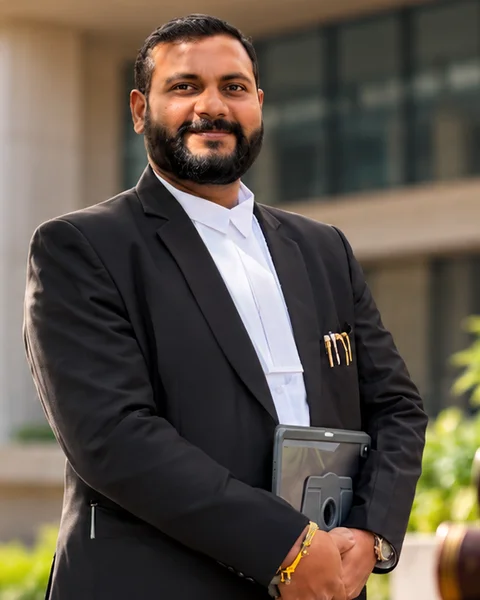
Written and reviewed at B.K. Singh & Associates
Advocate B.K. Singh
Founder of B.K. Singh & Associates. MCA, LL.B., LL.M., with more than twenty years of practice before the Supreme Court, the Delhi High Court, district courts and tribunals across Delhi NCR. This article explains the general law as of 24 October 2026; it is not legal advice on your facts.